
You usually do not need an ISBN to print one book for yourself, your family, or a private gift. An ISBN becomes relevant when the book is treated as a published product: listed for sale, supplied to retailers or libraries, or distributed through a platform that requires one.
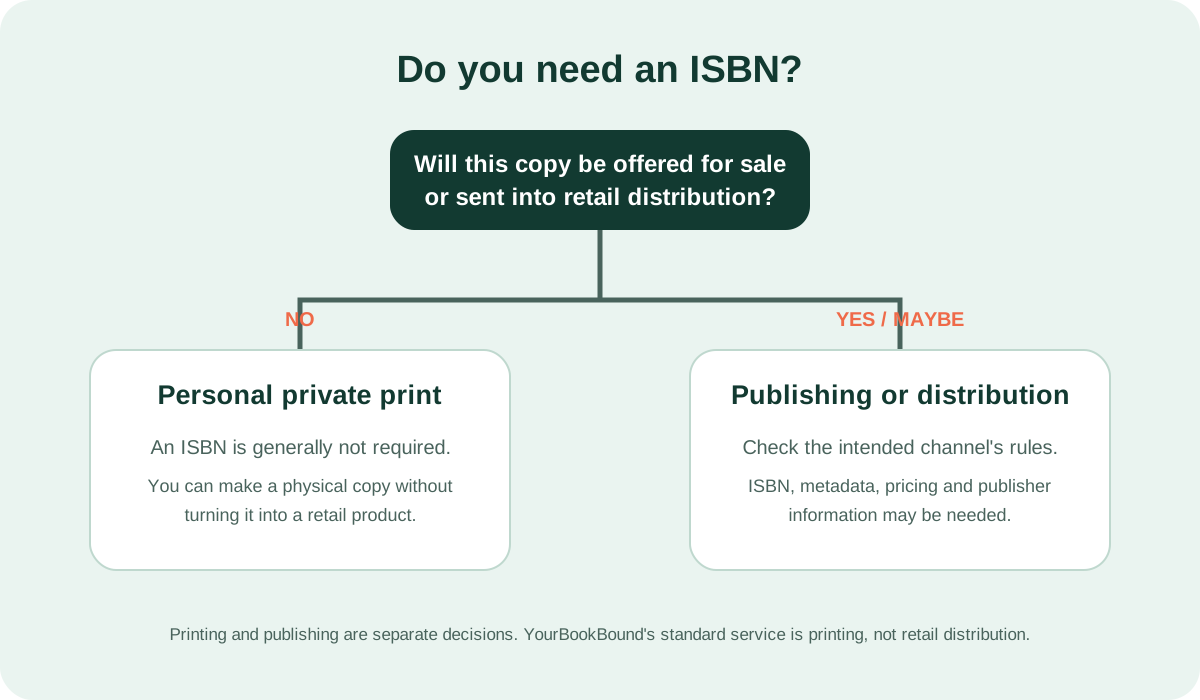
The short answer: decide whether you are printing or publishing
If you are making one copy of a memoir, family history, children’s story, photo book, thesis, portfolio, or personal project and do not plan to sell or distribute it, you can normally print it without an ISBN.
The U.S. ISBN Agency says custom publications are not assigned ISBNs unless an identifier is needed for the publisher’s internal systems, because there is only one customer in that arrangement. Its overview also explains that ISBNs help bookstores and libraries identify and sell books. That is a useful dividing line: an ISBN serves publishing and distribution systems; it is not permission to print a physical copy.
One useful question: Does this book need to be found, ordered, and tracked as a retail product? If the answer is no, an ISBN is usually unnecessary. If the answer is yes or maybe, check the rules of the sales and distribution channels you intend to use.
- One private copy for yourself: no ISBN is normally needed. Follow the printer’s file requirements.
- A family gift that will not be sold: no ISBN is normally needed. You still need permission for material you did not create.
- A private proof before deciding whether to publish: the proof itself does not normally need an ISBN. Check the future publisher or platform before release.
- An ordinary paperback or hardcover published through Amazon KDP: KDP requires an ISBN. Follow its current ISBN and imprint rules.
- A book placed with stores, libraries, or wholesalers: an ISBN is usually part of the distribution setup. Check your national ISBN agency and distributor requirements.
- A book sold directly without retail distribution: an ISBN is not always required, although payment, tax, metadata, and local legal obligations still apply.
What does an ISBN actually do?
ISBN stands for International Standard Book Number. It is an identifier for a specific book product from a particular publisher. Bookstores, libraries, distributors, and catalog systems use it to distinguish one title, edition, and format from another.
This is why a paperback and hardcover are not supposed to share one ISBN. The U.S. ISBN Agency states that each format or binding needs a separate number and that a revised edition needs a new one. Amazon KDP applies the same format distinction: an ordinary paperback and hardcover each need their own ISBN on that platform.
An ISBN does not print the book, approve the writing, prove that you own every image, or create a publishing contract. It also is not the same thing as the barcode on the back cover. A barcode is a machine-readable graphic that can encode the ISBN for retail scanning.
When might you need an ISBN?
You plan to publish through a print-book platform
Each platform sets its own rules. Amazon KDP, for example, requires an ISBN for ordinary paperback and hardcover publication. It can provide a free KDP ISBN or accept one you purchased from the official agency for your country. KDP notes that its free number can only be used on KDP.
That is a platform requirement, not a rule that every physical book in existence must carry an ISBN.
You want retail or library distribution
An ISBN helps trading partners identify the correct title, publisher, format, and edition. If you want bookstores, libraries, or wholesalers to order and track the book, ask the intended distributor what it requires before you design the final cover or copyright page.
You are creating more than one public format
A paperback, hardcover, and separately sold edition are distinct products. Plan their identifiers before release. Reusing one ISBN across formats can create mismatched listings and inventory records.
Does an ISBN protect your copyright?
No. An ISBN identifies a book product. Copyright protects original authorship. They solve different problems.
For a U.S. audience, the U.S. Copyright Office explains that copyright exists when an original work is fixed in a tangible form. Registration is a separate legal process. It is not mandatory for copyright to exist, although registration affects how a U.S. copyright owner can enforce rights and pursue certain remedies.
Buying an ISBN is not copyright registration. Printing a copyright notice is not an ISBN application. And printing one private copy does not clear the rights to photographs, illustrations, lyrics, characters, or text created by someone else. If your file includes third-party material, make sure you have permission to use it.
How do you print one book without an ISBN?
- Finish the interior. Export a PDF if the layout is complete, or keep the editable DOC, DOCX, or RTF file if it still needs preparation.
- Decide the finished size and binding. Those choices affect margins, page setup, and the cover template.
- Prepare the cover separately. A hardcover wrap depends on the final size, page count, paper, and binding. Do not leave a fake ISBN or placeholder barcode on it.
- Tell the printer it is a private copy. Make clear that you are ordering a physical book, not retail publishing or distribution.
- Review the proof. Check names, page order, blank pages, cropping, spine text, and cover direction before production.
If your interior already exists as a PDF, use the more detailed guide to printing a book from a PDF. If you are still deciding how to turn a personal manuscript into a finished object, read How to Print a Book for Personal Use.
YourBookBound’s standard service produces one finished hardcover from the customer’s file. It does not place the title in retail catalogs or distribute it to bookstores. You may submit the interior and an optional cover for a free file check before deciding whether to order.
Common ISBN questions
Do I need an ISBN for a book that is only a gift?
Usually no. If the copy is private, not offered for sale, and not sent into retail or library distribution, an ISBN generally serves no practical purpose.
Can I print a proof copy before getting an ISBN?
Yes. A private physical proof can help you check the layout and binding before making a publishing decision. If you later use a publishing platform, follow its identifier and cover requirements for the released edition.
Can I add an ISBN later?
You can assign an ISBN before releasing a later published edition. You may need to update the copyright page, metadata, and cover barcode. Register the correct title, publisher, format, and edition with the appropriate agency or platform rather than inserting a number only as artwork.
Does every copy of the same edition need a different ISBN?
No. Copies of the same edition and format use the same ISBN. A different format or revised edition may require a different number.
Can the printer give me an ISBN?
Some publishing platforms and service providers offer an ISBN as part of publication. The terms matter: the associated imprint, eligible sales channels, and reuse rights may differ. If you only want one private copy, do not add a publishing service you do not need.
What if I might sell the book later?
Print the private proof first if that helps you make the decision. Before public release, choose the intended sales channels and check their current rules. That is the right time to decide who will be the publisher of record and where the ISBN will come from.
One private copy does not need to become a retail product
Send the book file for a free human check.
Upload the finished interior and an optional cover. There is no payment at upload and no obligation to order. We check your files and explain how the $99 USD service covers file preparation, proof, one hardcover and standard tracked shipping.
Sources reviewed: U.S. ISBN Agency overview; U.S. ISBN Agency general FAQ; Amazon KDP ISBN and imprint guidance; Amazon KDP ISBN options; U.S. Copyright Office copyright overview. Requirements vary by country and distribution channel. This article provides general information, not legal advice. Sources last reviewed August 30, 2026.