
Independent review; spoilers ahead. YourBookBound is not affiliated with Kenneth Grahame, any publisher, any rights holder, or any film, television, stage, or other adaptation of The Wind in the Willows. This review discusses the original public-domain text, not a particular modern retelling or illustrated edition.
The Wind in the Willows is often introduced as a cozy animal classic, and it can be cozy: its riverbank meals, borrowed hospitality, weather, and long walks make a roomier kind of comfort than most contemporary children’s fiction attempts. But Kenneth Grahame’s 1908 story is more interesting than a soft-focus invitation to settle down. Its deepest question is whether friendship can stay generous when one member keeps turning every shared responsibility into somebody else’s emergency.
That question belongs at the center of a family read-aloud. Mole, Rat, Badger, and Toad do not simply model loyalty. They argue, set limits, lose patience, stage an intervention, and eventually defend a home together. The result is a book with real comic lift and a surprising amount to say about belonging. It is also an uneven fit for younger children: its language is old-fashioned, its pace wanders by design, and its social world can feel more exclusive than the riverbank first suggests.
The short version of the story
Mole leaves spring cleaning behind and discovers the river, where the sociable Water Rat introduces him to the pleasures of boating and an outdoor life organized by seasons rather than schedules. They visit the private, formidable Badger and spend time around their volatile friend Toad of Toad Hall. Toad’s enthusiasms move from boats to caravans to motorcars, and each new obsession is treated as a grand destiny rather than a passing interest. His reckless driving leads to theft, arrest, imprisonment, and escape. While Toad chases excitement, hostile weasels and stoats take over Toad Hall; the friends finally join him to reclaim it.
That synopsis makes the book sound tighter than it is. Grahame pauses for a winter journey, a domestic interlude, a dreamlike river episode, and an extended encounter with a wanderer. Those detours are not filler. They make the novel’s case that a life is made from attention, hospitality, and place—not merely from the plot points that can be recounted afterward.
Why the riverbank still feels alive
Grahame’s most durable achievement is rhythm. The opening pages slow a reader down without becoming inert. River life is conveyed through small invitations: a picnic, a boat, a path, a change in weather, the pleasure of somebody knowing which supplies matter. For children used to stories that rush toward a problem, this can be an education in atmosphere. A chapter can matter because it lets two friends notice where they are.
That is also why the book benefits from being read aloud in portions. Its sentences carry shifts in mood that can be difficult to scan quickly on a screen. Give the book room, and Rat’s rootedness begins to look less like mere niceness and more like a practiced form of care. He knows how to welcome Mole because he pays attention to what a newcomer needs.
Toad is funny because the consequences are real
Toad is the engine of the comic plot, but he is not only a harmless eccentric. He boasts, ignores warnings, treats danger as an audience for his brilliance, and expects friends to clean up after him. The comedy works because the other characters do not agree to pretend his conduct is fine. Rat and Badger’s attempt to contain him is paternalistic and imperfect, yet the story understands why they reach a limit.
For a child, Toad can be delightfully theatrical: every setback becomes a chance for a new disguise, speech, or self-congratulation. For an adult reader, he raises a worthwhile question: what does support look like when it must include a boundary? The final return to Toad Hall is satisfying not because Toad is suddenly wise, but because a community can act together even when one of its members has made a mess of things.
A book about home, with a narrow doorway
The story’s homes are wonderfully distinct. Mole’s underground house is vulnerable and tender; Rat’s river home is open and companionable; Badger’s place is ancient and guarded; Toad Hall is grand, chaotic, and in need of stewardship. Children can notice how each house affects the behavior inside it. The book gives a concrete way to talk about why a home is more than property: it is where routines, memories, guests, and responsibilities meet.
Yet that warmth has a limit. The animals’ society is strongly coded by class and respectability. The invaders are drawn broadly as undesirable outsiders, while the central friends reclaim an inherited estate. That is a meaningful caveat, not a reason to erase the book. Parents and educators can name it plainly: who gets treated as belonging here, who does not, and what assumptions does the story make about a “proper” home? The conversation is especially useful because the book’s own picture of loyalty is otherwise so appealing.
The language is part of the experience—and a barrier
Grahame moves between playful dialogue, formal narration, lyric nature writing, and parody. Toad’s self-dramatizing speeches land differently from Rat’s river reveries, and that contrast keeps the book from becoming one long pastoral mood. The language invites a reader to hear how a sentence can change speed and character.
It also asks for help. Some vocabulary, idiom, and social references will be unfamiliar to today’s young readers. The “Piper at the Gates of Dawn” chapter has a hushed, mythic register that may be moving for some families and puzzling for others. There is no need to force every word into a lesson. Pause when meaning affects the scene, then keep the story moving. An unabridged edition is best for readers ready for that texture; a clearly identified adaptation may be a better bridge for younger listeners.
Illustrations and editions: choose deliberately
This is not one fixed visual object. The Project Gutenberg text used for this review reproduces a 1913 Charles Scribner’s Sons edition illustrated by Paul Bransom and identifies 1908 and 1913 copyright notices. Modern editions may be abridged, redesigned, or illustrated very differently. Before a classroom or family purchase, check whether the edition is unabridged, who illustrated it, and whether notes are added. That small bit of edition awareness helps adults match the book to the reading experience they actually want.
For independent creators, that is a useful publishing lesson too: a story’s words, art, trim, and pacing work together, but they are not interchangeable. If you are preparing an original finished children’s-book file of your own, the physical reading experience deserves the same deliberation as the manuscript. Our guide to printing one copy of a children’s book covers the production questions after an original file is ready; it makes no claim about this book’s publisher or ownership.
Content notes and best audience
The novel includes peril, imprisonment, deception, a gun-related confrontation during the recapture of Toad Hall, and stereotyping tied to class and nationality. Its animal characters behave as adults in a very human social world. I would suggest it as a family read-aloud for roughly ages 7–10 with an adult available to explain language and discuss the rougher moments; confident independent readers may enjoy it a little later. That is a reading-fit suggestion, not a publisher age rating.
Questions to take beyond the last chapter
- When do Rat and Badger help Toad, and when do they need to set a boundary?
- Which home feels safest to you, and what makes it feel that way?
- What does Mole learn by leaving home? What does he learn by returning?
- Who is welcomed into the friends’ world, and who is kept outside it? Is that fair?
- How does the story use slow, quiet scenes differently from Toad’s fast ones?
Final evaluation
The Wind in the Willows earns its lasting place not because it is uncomplicatedly gentle, but because it knows comfort requires attention and friendship requires more than indulgence. Its wandering structure and antique language will not suit every child, and its social assumptions warrant active discussion. Read in portions, with space for questions, it offers humor, atmosphere, and a rich conversation about how a group protects both a home and one another.
Rating: 4 out of 5. Best for readers ready to linger, laugh at Toad, and ask what loyalty should ask of us.
Sources and edition note
- Project Gutenberg, The Wind in the Willows: full public-domain U.S. text, bibliographic metadata, and edition details.
- Project Gutenberg HTML text: consulted for the complete chapter sequence, plot, and language analysis.
- Bodleian Libraries, Manuscripts of Kenneth Grahame: archival record for the 1907 letters and 1908 manuscript materials.
- Bodleian Libraries, The Original Wind in the Willows exhibition note: context on the 1907 letters to Grahame’s son.
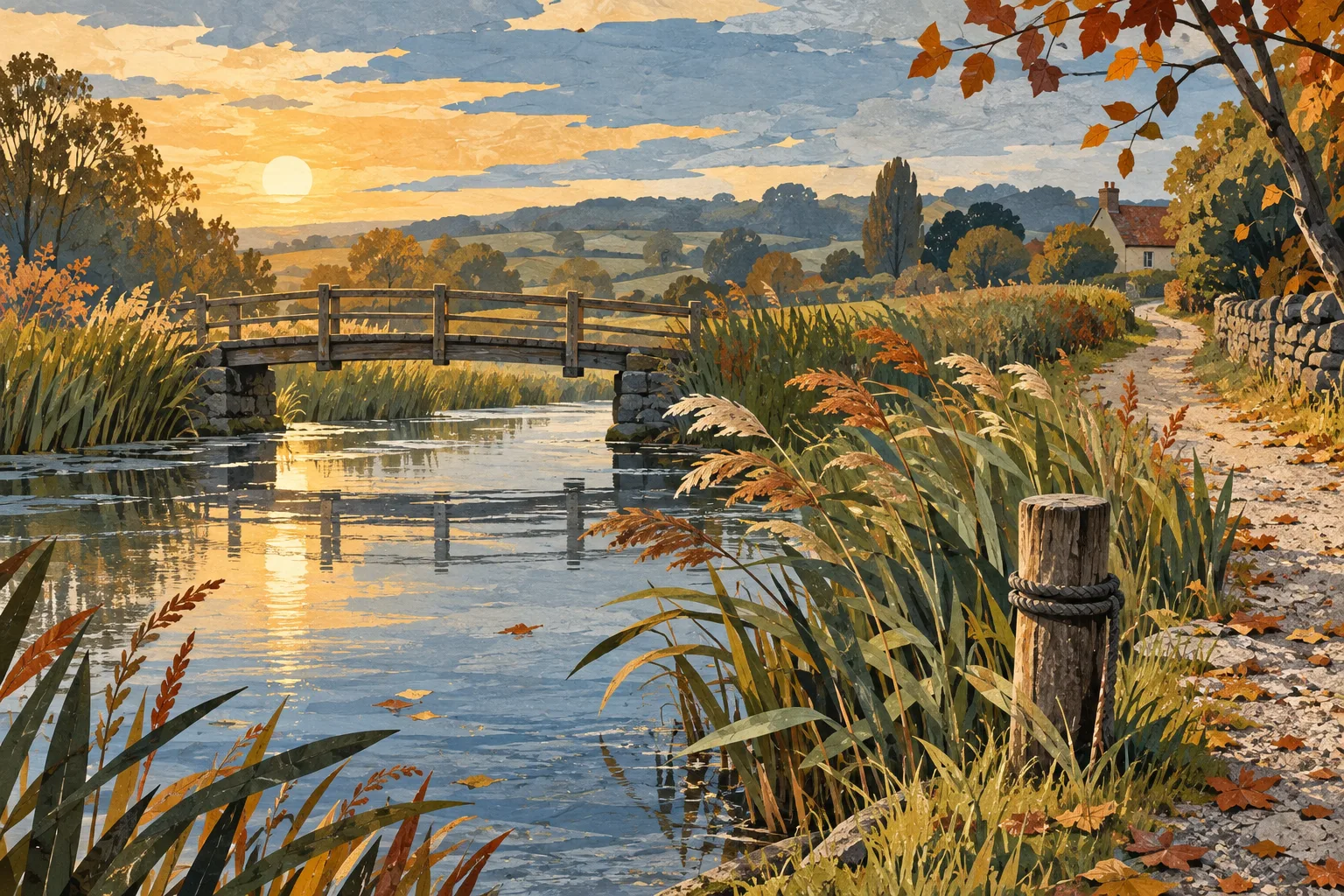
Original AI-assisted editorial illustration created for YourBookBound; not from the book.