
You can print a collection of your finished short stories without planning a large print run. The main preparation work is to choose the order, make formatting consistent, and check how each story begins and ends in the book. Decide separately whether you want private copies or a retail publishing project.
Choose a reason for the order
Try arranging stories by theme, setting, chronology or the experience you want the reader to have. The strongest opening story is not necessarily the longest. A quieter ending may work well after an intense story, while two very similar pieces back to back may blur together.
Make a one-page contents list before formatting. Beside each title, note its approximate length and the reason for its place. This makes it easier to see whether the collection has a deliberate shape or simply follows the order in which files were saved.
Gather one final version of every story
Keep a folder containing only the selected versions. If a story exists in several drafts, name the chosen file clearly and move older versions out of the handoff folder. A printer cannot infer which ending or revision you intended from three similarly named documents.
Resolve remaining editorial decisions before layout. Technical file preparation is different from developmental editing or writing new material. If other writers contributed, agree on their final text, display names and permission to include it before assembling the collection.
Standardize the reader’s experience
Use a consistent body-text style, chapter-title treatment and scene-break marker. Preserve deliberate variations, such as a letter or diary entry within a story, but explain them in your layout notes. Do not use repeated spaces or dozens of empty paragraphs to position text.
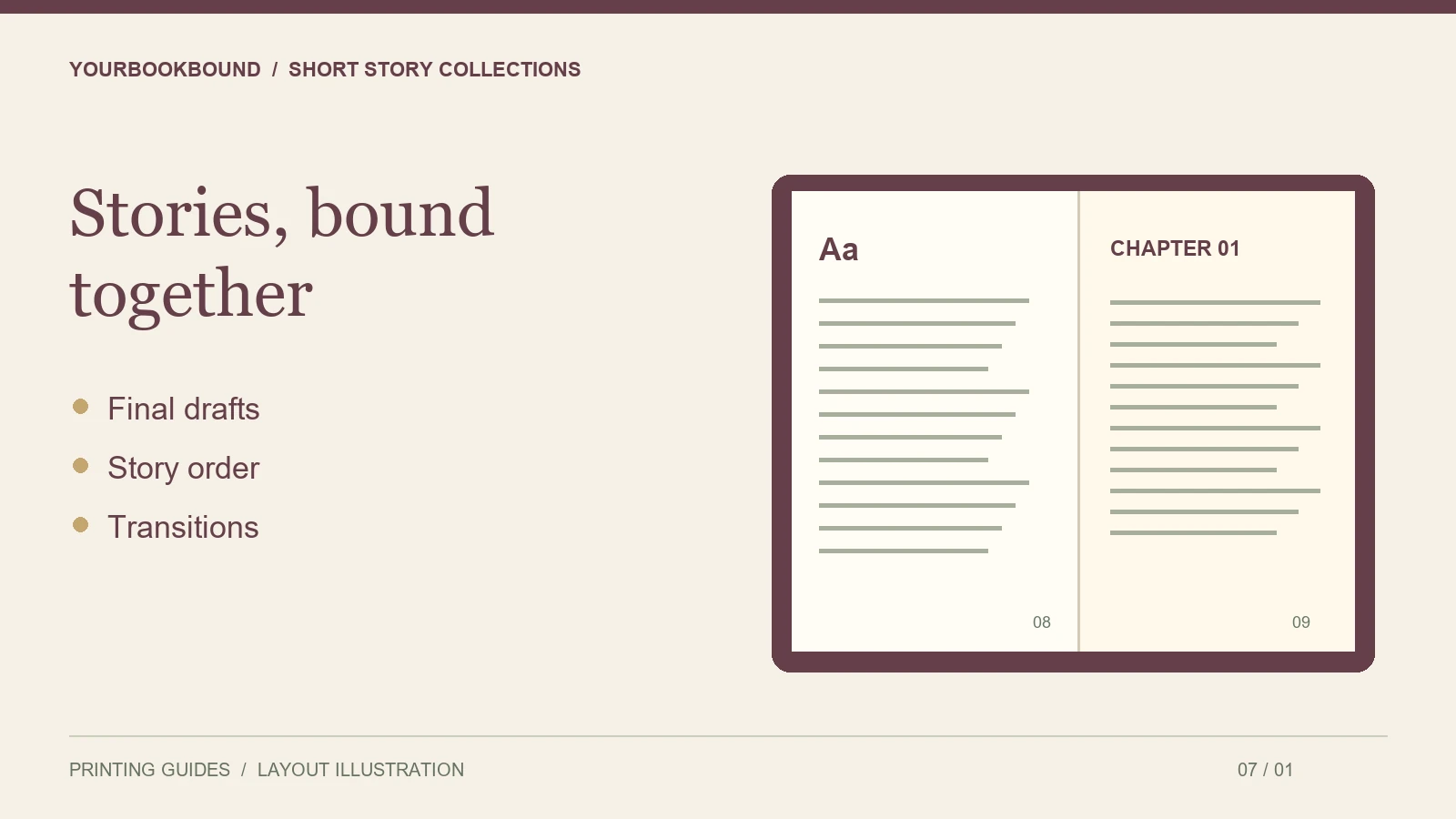
Start each story on a new page. Decide whether it must start on a right-hand page, because that choice may introduce intentional blanks. Keep a list of those blanks so they are not mistakenly removed later. A very short piece can still have its own opening page without being padded with extra text.
Add only the supporting pages you need
A title page, contents page and brief author note may be enough for a personal edition. Contributor biographies or original publication notes can be useful in an anthology, but they should serve the reader rather than imitate a long commercial book’s front matter.
Check the title and order against your contents list after layout. Page numbers should be confirmed from the final proof, not copied from the original Word files. If poems make up most of the collection, use the poetry-printing guide for line-break-specific preparation.
Proof beginnings, endings and transitions
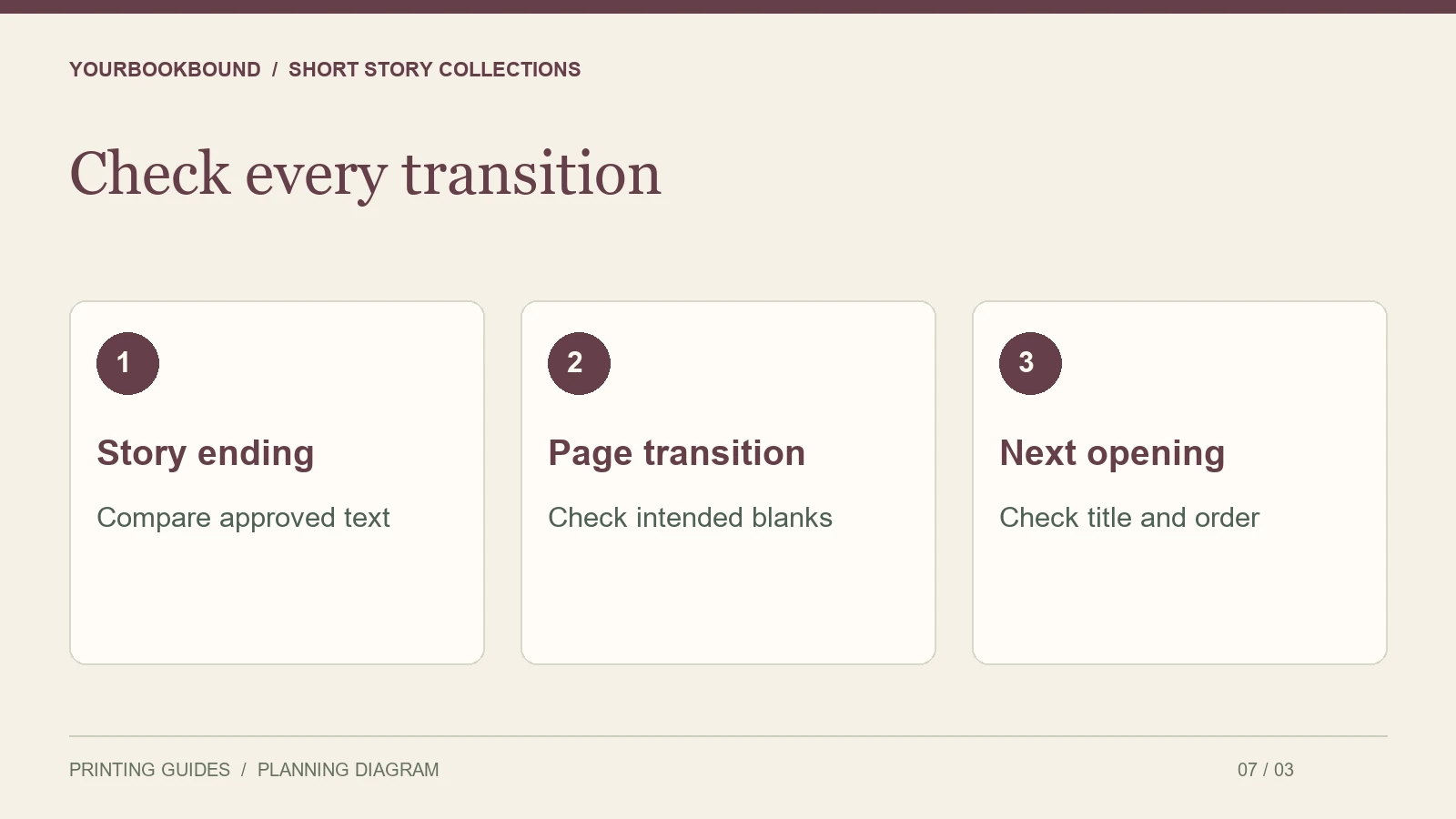
Read the first and last paragraph of every story against the approved manuscript. Then inspect every scene break, italic passage and unusual symbol. Finally, read across the transition between stories: does a new title appear where you expect, and are blank pages intentional?
For a practical review sequence, see how to review a digital book proof. Proof approval should happen after text and layout corrections, not while you are still choosing which stories belong in the collection.
Should this be a private edition or a publishing project?
| Your goal | Preparation priority |
|---|---|
| A personal shelf copy | Final versions, readable layout and a satisfying story order. |
| A gift anthology | Contributor names, approved text and the correct number of copies. |
| A book for retail sale | A separate publishing and distribution plan as well as the printing files. |
Do not confuse a printed collection with acceptance by a publisher or placement in a bookstore. Printing resolves the physical-book part of the project. For private copies, the personal-use printing guide explains the workflow without turning this story-specific checklist into a general publishing guide.
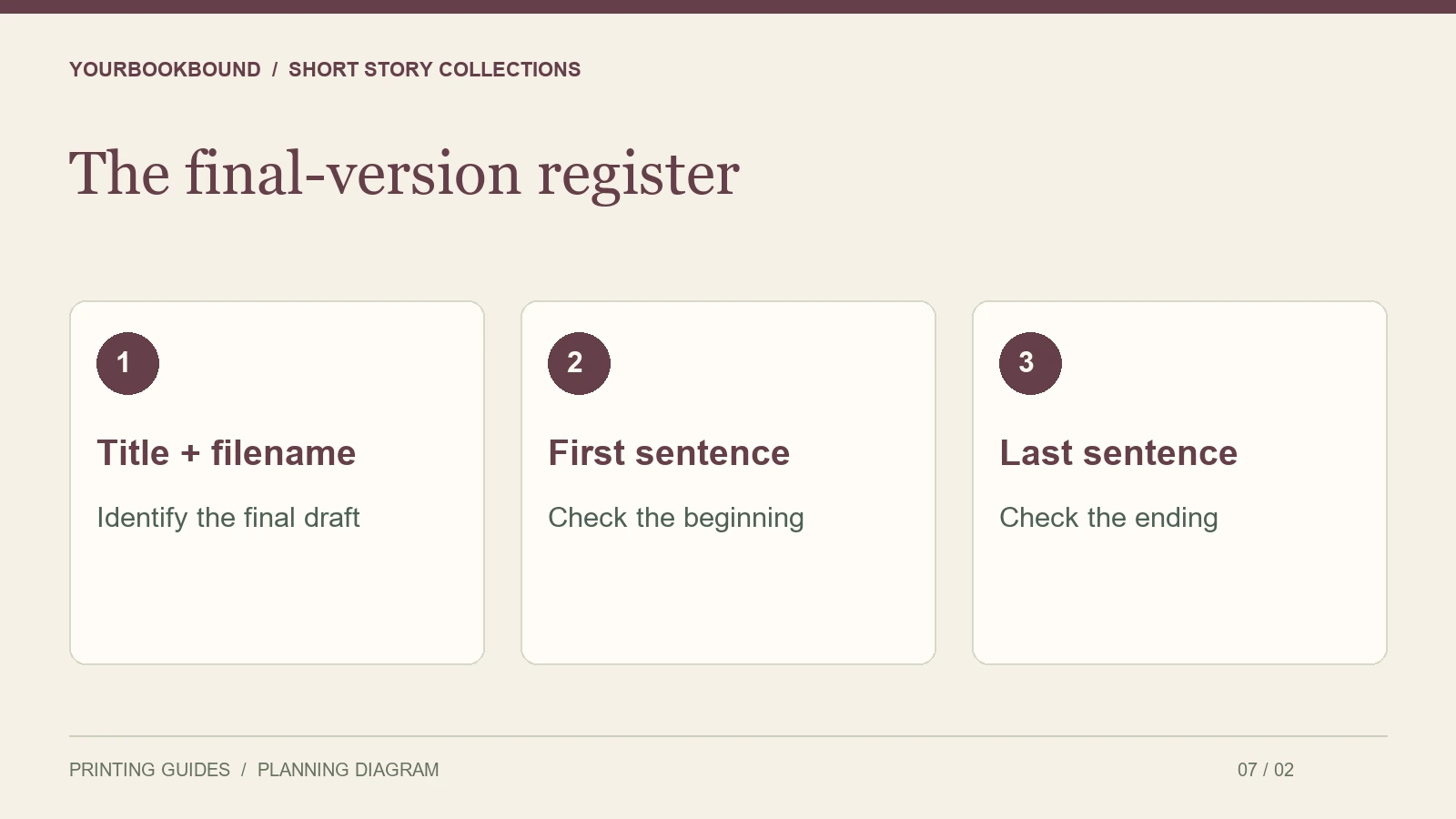
Make a version register before merging files: title, final filename, first sentence, last sentence and any intentional formatting. These boundaries give you a quick way to confirm that the correct version survived layout. A word count alone cannot tell you whether an earlier ending slipped back in.
For the contents page, use the final printed page labels rather than the PDF viewer’s sheet index. Front matter can make those two numbers different. After a late correction, recheck the affected story’s opening and every contents entry after it; one added page can move more than one reference.
Will printing make my book available in shops?
Printing a private collection is not a retail distribution service. If selling through stores is your aim, plan the publishing and distribution steps separately.
Can I order one hardcover collection?
Yes. Send the completed collection for a free file check, including the contents list, approximate length, preferred size and shipping country. Explain any special formatting before the digital proof is prepared.