
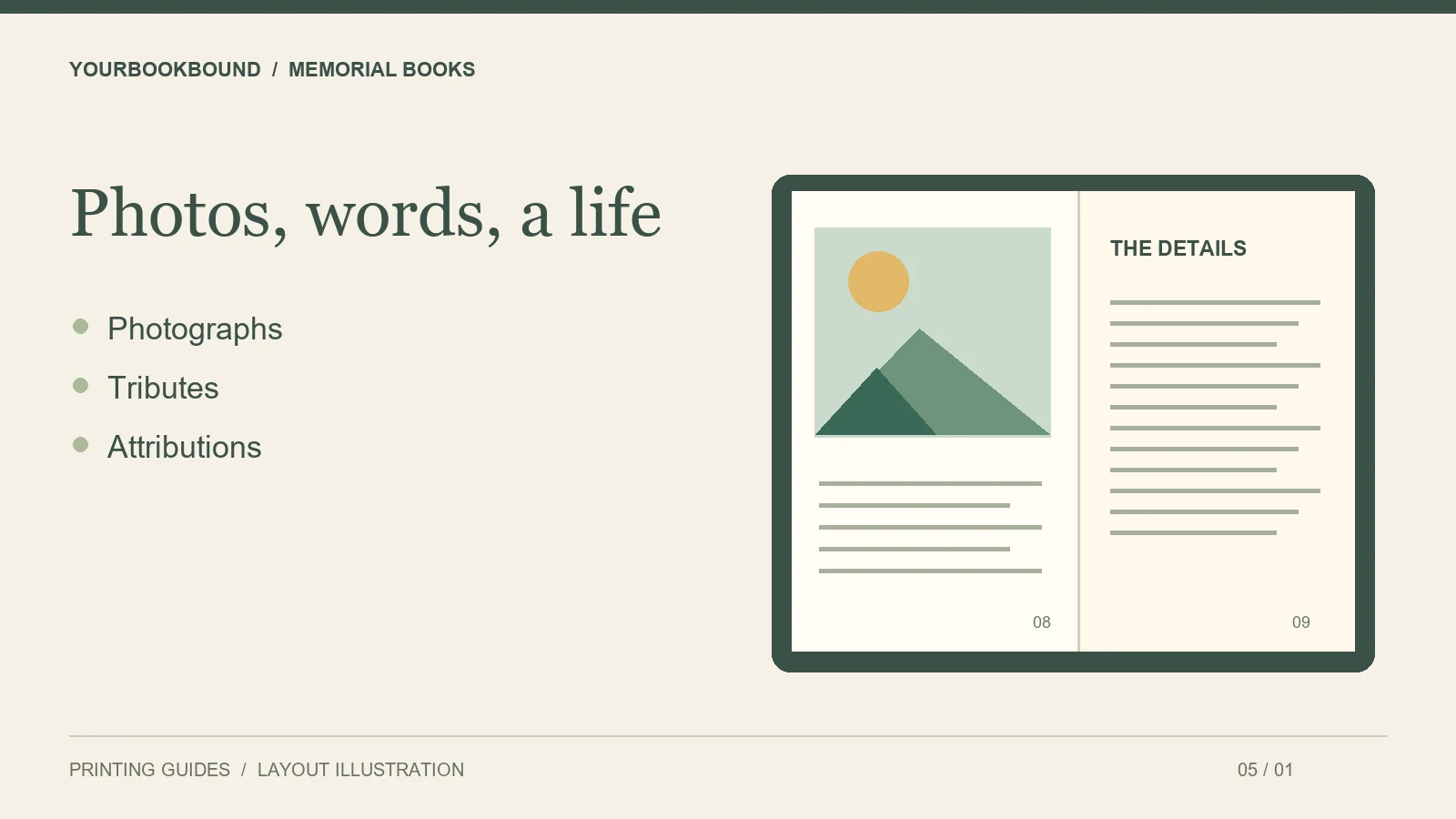
A memorial book can bring photographs, written memories and a short account of someone’s life into one printed keepsake. Start with the material you already have, appoint one person to organize it, and leave time for the family to review the complete book. It does not need to contain every memory to be meaningful.
Separate a keepsake from an event deadline
A book intended for a memorial gathering has a fixed date. A family keepsake can be completed later, when contributors have had time to respond. Decide which matters more before planning the pages. Do not rely on an unconfirmed production estimate for a time-sensitive event.
If the deadline is close, ask about feasibility before collecting additional material or promising copies to others. A later, carefully reviewed edition may be more suitable than rushing a book with missing tributes or incorrect names.
Give contributors a simple invitation
Ask for one specific memory, the contributor’s preferred display name and an original photo if they have one. Set a suggested length to make the page planning manageable, while allowing someone to decline. Explain who will receive the finished book and ask whether their contribution may be included.
Keep a contribution list with four fields: contributor, material received, display name confirmed, and approved for inclusion. Avoid forwarding entire private message threads when only one paragraph is intended for the book. Copy the agreed text into the working document.
Choose an order that feels natural
Three practical structures are a life chronology, chapters around relationships and interests, or a photo-led book with short memories beside each image. Choose one main structure instead of changing the organizing principle every few pages.
For example, a relationship-based book might include family, friendships, work and favorite places. A brief opening note can explain that these are selected memories. Do not fill gaps in someone’s life with invented details simply to make chapters the same length.
Check names and photographs carefully
Ask a family reviewer to confirm dates, names and captions. Mark uncertain information as uncertain or omit it. For old photographs, retain a copy of the original scan before making adjustments. A gentle cleanup should not introduce people or details that were not present.
Keep faces away from trimming and binding edges. For a group portrait, compare the full image with the proposed crop. If the print area is too small to identify everyone, use fewer photographs on that page rather than adding more labels in tiny text.
Review in two passes
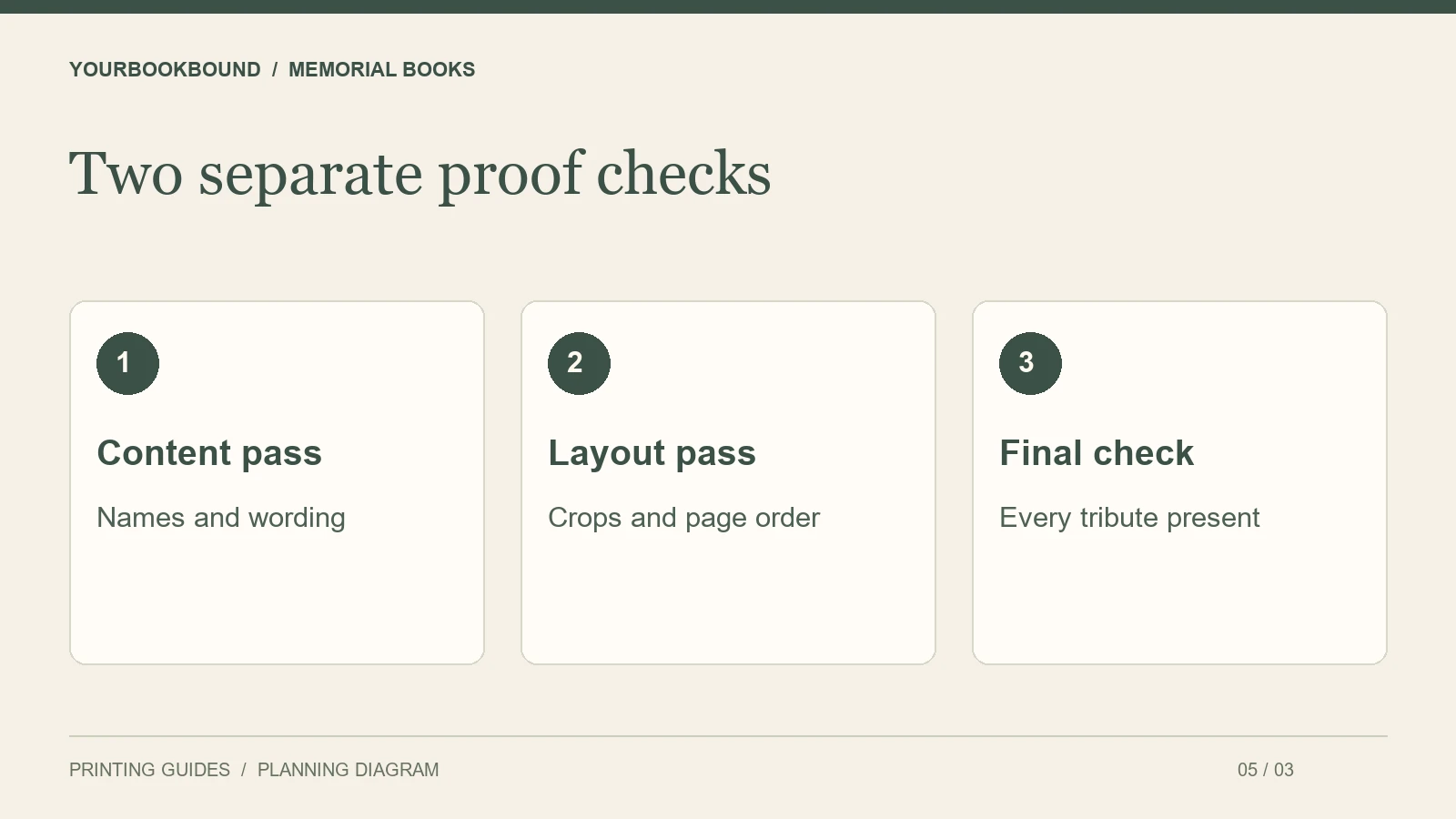
First, review the content: spelling, tribute wording, contributor names and whether anything feels too private. Second, review the layout: image crops, chapter order, readable captions and missing pages. Let contributors approve any substantial edits to their own words before you approve the print proof.
A digital proof can show the arrangement of pages and text. It does not guarantee a particular paper feel or exact color match. Our digital-proof checklist provides a useful final review sequence.
What should the organizer prepare before layout?
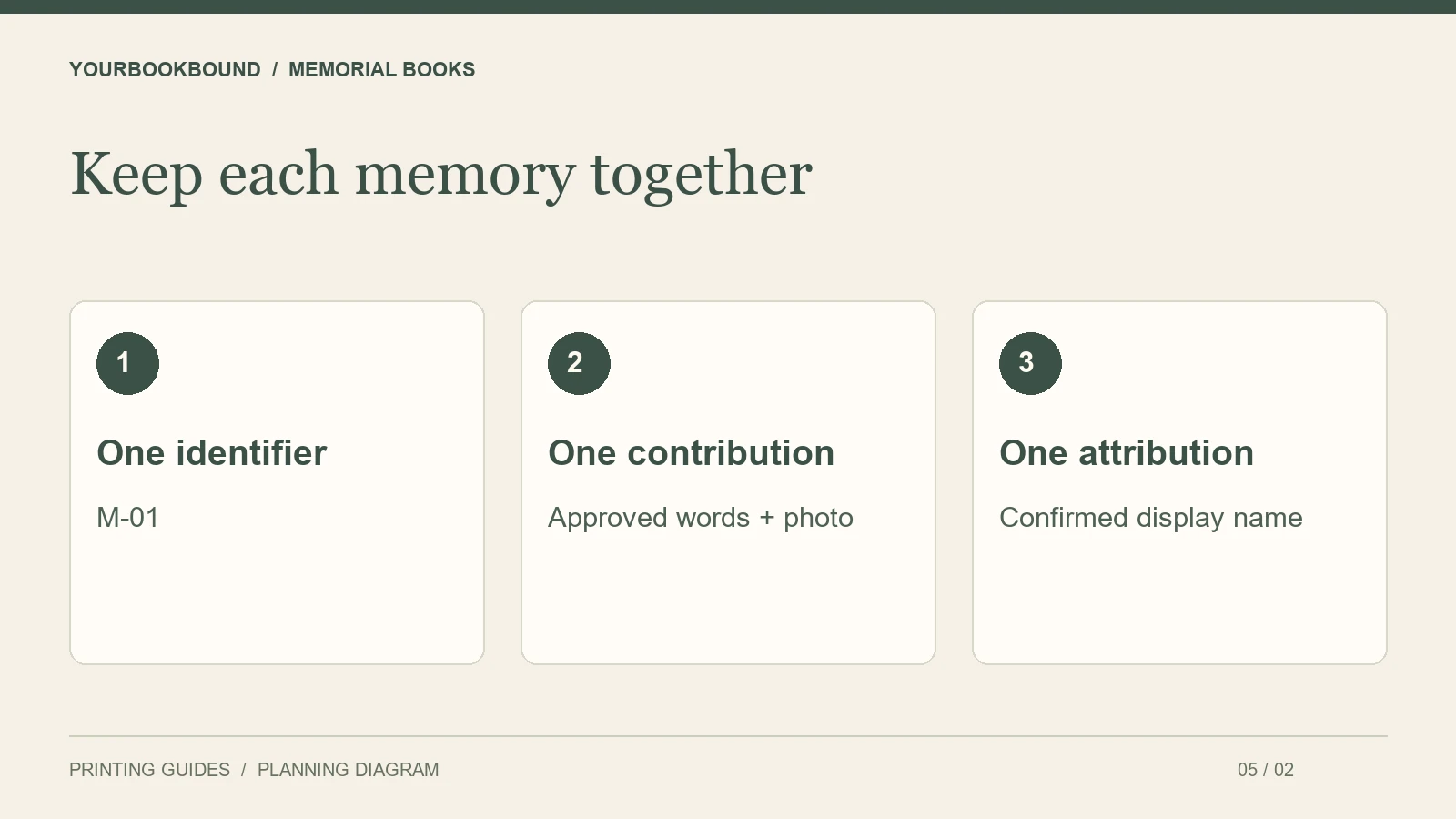
Create a small, agreed collection rather than an open-ended folder of everything received. Keep the final tribute text, its approved display name and any associated photograph together under one identifier. This makes it easier to spot a missing attribution when pages move.
| Field | What to record |
|---|---|
| Contribution ID | M-01, reused in the text and image filenames. |
| Attribution | The name or relationship the contributor wants printed. |
| Caption confidence | Confirmed information, or a clearly identified uncertainty. |
| Approval | Whether the contributor agreed to this version and audience. |
| Proof location | The final page where the contribution appears. |
Keep uncertain memories in the contributor’s voice. “I remember this as our first visit” is different from declaring an unverified date as a historical fact. If family accounts differ, do not silently combine them into a new story.
Before approval, compare the tracker with the proof one entry at a time. Then ask a second reviewer to check only the cover name, dates and prominent captions. Separating that small check from reading the whole book makes it easier to concentrate on details that are particularly painful to get wrong.
Does YourBookBound collect tributes from relatives?
The standard service starts with your completed text and images. Arrange contribution collection and family approval yourself; an online memorial-import service is not assumed to be included.
What do I need for an initial review?
Send the selected text, photographs, approximate length, quantity, delivery country and any important date. Request a free file check to discuss the printing step without committing the family to an unverified delivery promise.